
Social Media and News Coverage Don’t Decide Liability
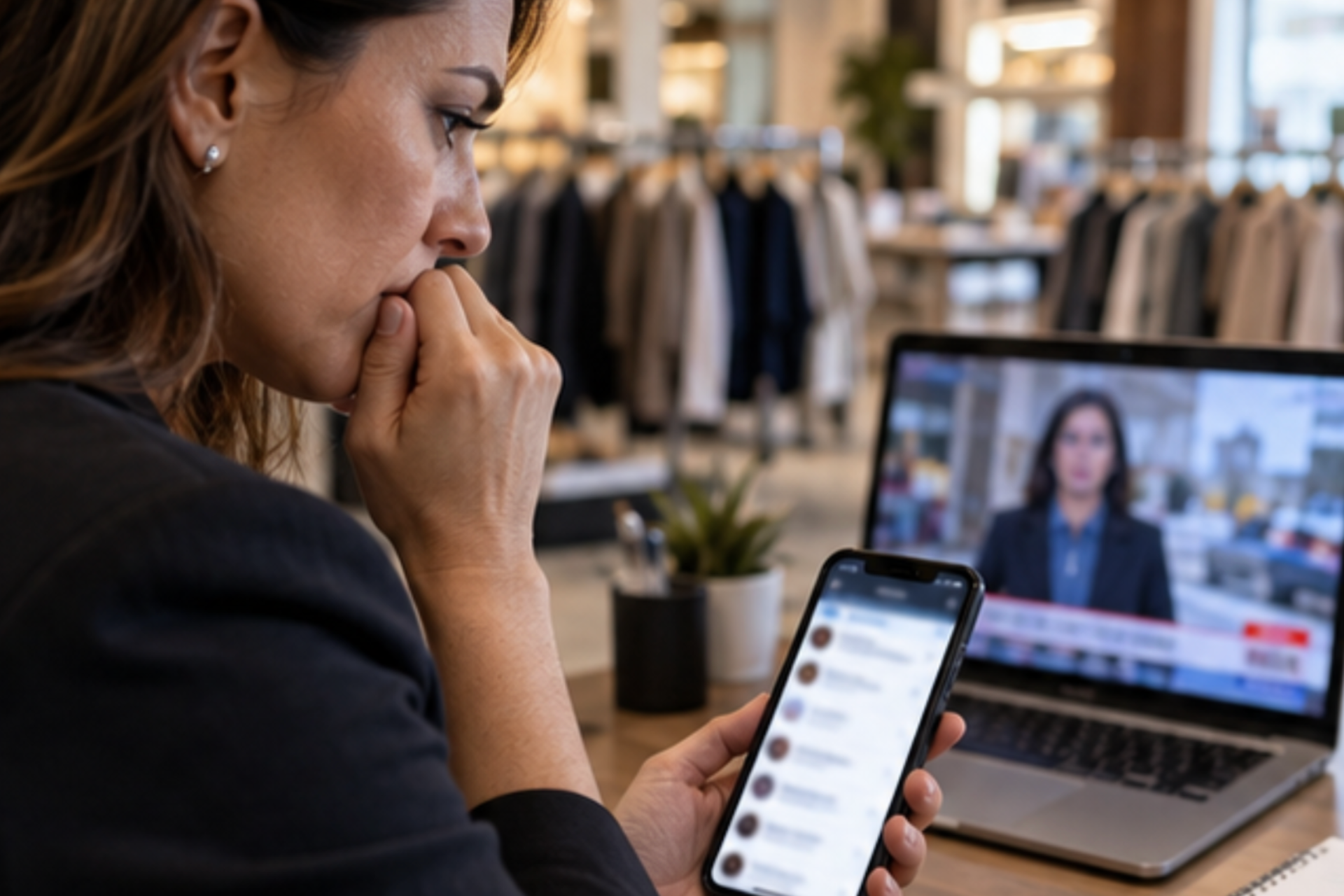
A lawsuit hits the news; social media picks it up, and within hours, people who weren't there and haven't seen the evidence have decided exactly what happened and who's responsible. Well done, couch detectives.
We’ve seen this play out on a massive scale with the public attention surrounding the Lindsay Clancy trial. It's a completely different practice area from mine, but it highlights something I see in civil litigation too: the story being debated online isn't necessarily the case being litigated in court.
Negative headlines can feel significant, especially when hundreds or thousands of people are reacting to one version of events.But cases aren't won or lost in the court of public opinion. A compelling headline isn't evidence. A viral post doesn't establish negligence. And thousands of angry comments don't change the plaintiff's burden of proof.
Liability is determined by the facts, admissible evidence, applicable law, and ultimately, the legal process. For retailers and other businesses facing public attention around a lawsuit, remembering that distinction can prevent a PR problem from turning into a litigation problem.
What Actually Determines Liability in a Lawsuit?
When litigation becomes public, it's easy to focus on the loudest narrative. But the courts focus on what can actually be proven.
ELEMENTS OF THE CLAIM STILL HAVE TO BE PROVEN
Take a negligence claim against a retailer. Generally, the plaintiff still has to establish duty, breach, causation, and damages. Media coverage doesn't eliminate any of those elements. If the claim involves a slip and fall, the plaintiff will need evidence showing that the retailer created the hazardous condition, knew about it, or should have discovered it through reasonable inspections.
If the case involves a third-party criminal act, different issues may arise, including foreseeability, security measures, and whether the retailer's alleged conduct actually caused the plaintiff's injuries. Those questions are answered with evidence, not public opinion.
EVIDENCE, NOT ENGAGEMENT, DRIVES THE CASE
In the cases I defend, evidence may include surveillance footage, employee testimony, witness statements, inspection records, incident reports, photographs, maintenance records, depositions, and expert testimony.
A social media post receiving 50,000 views doesn't make it more persuasive than surveillance footage showing what actually occurred. Don’t panic if you’re a business whose negative publicity starts gaining traction. The internet may move quickly, but litigation doesn't.
THE BURDEN OF PROOF DOESN'T CHANGE WHEN A CASE GOES VIRAL
A plaintiff doesn't receive a lower burden of proof because the allegations attracted media attention. The defendant also doesn't have to publicly disprove every accusation circulating online.
The legal issues remain the same. What duty did the business owe? What did the business know? What actually happened? Did the alleged conduct cause the injury? What does the evidence prove? The number of people commenting on the case isn't part of that analysis.
Why the Court of Public Opinion Feels So Powerful

If social media doesn't determine liability, why can negative coverage feel so damaging? Because litigation and social media operate very differently.
HEADLINES SIMPLIFY COMPLICATED FACTS
Lawsuits are messy. There may be dozens of witnesses, hundreds of pages of records, hours of surveillance footage, conflicting testimony, complicated legal standards, and facts that aren't discovered until months after the complaint is filed.
A headline has a few words. News coverage may also begin with allegations from a complaint or statements from one side of the dispute. Those allegations can sound definitive when they're stripped of the procedural context surrounding them.
But a complaint tells you what someone alleges happened. It doesn't establish that those allegations are true.
SOCIAL MEDIA REWARDS EMOTION
Social media platforms aren't courtrooms. People react to short videos, photographs, headlines, and snippets of information without necessarily seeing the entire record. The most emotional version of a story may receive the most engagement even when important context is missing.
That's not a criticism of the public. It's simply the nature of the platform. A judge or jury, by contrast, is supposed to evaluate the evidence admitted in the case under the applicable law.
THE DEFENDANT OFTEN CAN'T TELL THEIR WHOLE STORY
This is where businesses can become particularly frustrated. You may have surveillance footage that contradicts an allegation. You may know a witness tells a very different story. Your attorney may have identified a strong legal defense.
And you still may not want to release any of it publicly. There are strategic, evidentiary, confidentiality, and sometimes ethical reasons not to litigate a case through social media. Staying quiet doesn't mean the business has no defense. Sometimes the business with the strongest defense is the quietest voice in the room.
Can News Coverage Be Used as Evidence in Court?
A news story about an incident isn't automatically proof that the events described in the story occurred.
Evidence offered in court must satisfy applicable evidentiary rules. Depending on what someone attempts to introduce, questions may arise involving relevance, authentication, hearsay, prejudice, and other evidentiary issues.
A headline saying "Customer Attacked at Local Retail Store", for example, establishes very little about whether the store itself was negligent.
The underlying claim may require evidence addressing what occurred before the attack, what the business knew, whether the incident was foreseeable under the applicable law, what security measures existed, and whether any alleged failure by the business caused the injury. The headline answers none of those questions.
That doesn't mean media coverage is always irrelevant to litigation. News reports may lead attorneys to witnesses or other evidence. Statements made publicly by a party may become important. Extensive publicity may also create issues during jury selection. But coverage of an allegation and proof of an allegation are two very different things.
Can Social Media Posts Be Used as Evidence in a Lawsuit?
Yes, social media can become evidence in litigation. A post still needs to satisfy applicable evidentiary requirements, but social media content can contain information directly relevant to the disputed facts.
For example, a plaintiff might make statements online about how an accident occurred or post photographs and videos that become relevant to claimed injuries or damages.
The same risk exists for businesses. Employees may post about an incident, respond to comments, share photographs, or make statements that conflict with the company's eventual litigation position. A well-intentioned employee who jumps online to "defend" the company can create an entirely new evidentiary problem.
That's why employees should be trained not to discuss active incidents or claims on their personal social media accounts.
And once litigation is pending or reasonably anticipated, don't start deleting potentially relevant content because it looks bad. Preservation obligations can extend to relevant electronic information, and deleting evidence may create a problem that didn't previously exist.
When a Plaintiff's Attorney Takes the Case to the Media
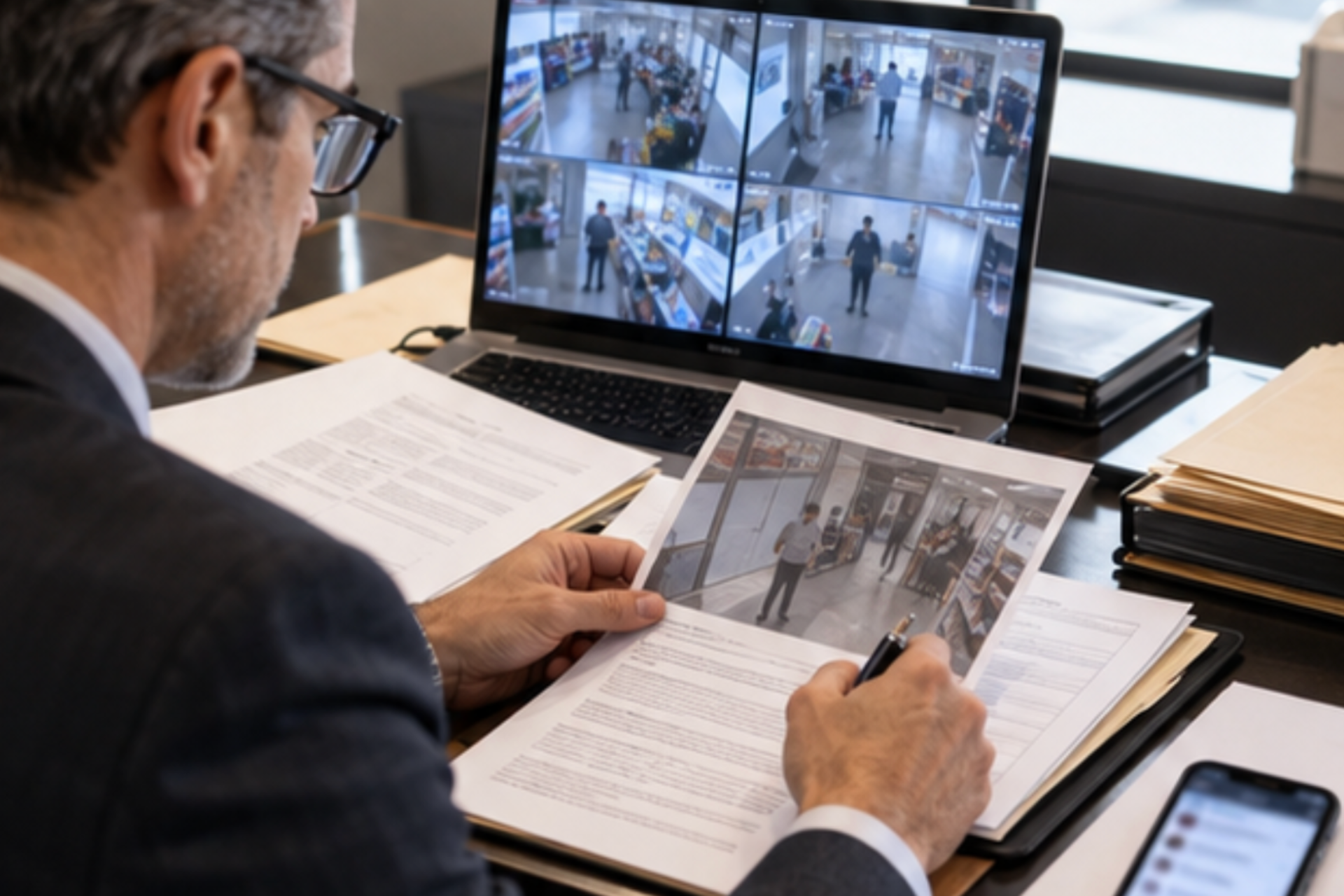
There are several reasons an attorney may speak publicly about a lawsuit. Media attention can increase awareness of a case, help locate witnesses, shape the public narrative, and put additional attention on the allegations.
For the defendant, that can create significant pressure. The instinct may be to respond immediately. Correct the story. Release the video. Defend the company. Or settle the case simply to make the negative attention disappear. That's exactly when businesses need to separate two very different questions:
Do we have a publicity problem?
And:
Do we have a liability problem?
They aren't necessarily the same. A business can face terrible publicity and still have a strong legal defense. A business can also receive almost no public attention while facing substantial legal exposure.
When one of my clients becomes concerned about media coverage, my focus remains on the case itself. What does the surveillance footage show? What did the employees know? What evidence has been preserved? What does the applicable law require? Can the plaintiff prove the elements of the claim?
5 Mistakes Businesses Make When a Lawsuit Goes Public
Public attention can create pressure to act quickly. Unfortunately, acting quickly without a strategy can create problems that last much longer than the news cycle.
#1: RESPONDING EMOTIONALLY ON SOCIAL MEDIA
Don't argue with commenters. Even when accusations are inaccurate or unfair, an emotional response rarely helps the litigation. Public comments can be screenshotted, preserved, and potentially raised later. Your social media manager shouldn't become your litigation spokesperson simply because the conversation is happening online.
#2: MAKING PUBLIC STATEMENTS BEFORE TALKING TO COUNSEL
Before making a substantive public statement about active litigation, coordinate with counsel. A statement intended to calm customers could inadvertently admit a disputed fact, contradict evidence discovered later, identify witnesses, or reveal part of the defense strategy. Sometimes a brief statement is appropriate. Sometimes saying very little is the better strategy. Make that decision intentionally.
#3: DELETING POSTS OR ONLINE CONTENT
Bad publicity can create a strong temptation to clean up the company's social media accounts. Be careful. If content is potentially relevant to pending or reasonably anticipated litigation, deleting it may raise evidence-preservation concerns. Relevant social media content should be considered alongside surveillance footage, emails, photographs, incident reports, and other electronically stored information when implementing preservation procedures. Preserve first. Decide what to do with it later.
#4: ALLOWING EMPLOYEES TO DISCUSS THE INCIDENT ONLINE
Employees may genuinely believe they're helping when they respond to accusations about their employer. They usually aren't. Employees should know where to direct media inquiries and should be instructed not to publicly discuss the facts of an active incident or lawsuit. That includes posting from personal accounts. One employee with partial information can unintentionally undermine months of careful litigation strategy in a few sentences.
#5: SETTLING BECAUSE THE PUBLICITY FEELS UNCOMFORTABLE
Sometimes settling early is the right business decision. Sometimes it isn't. Settlement decisions should account for liability, damages, litigation expense, business disruption, reputational considerations, and the strength of the available defenses. What they shouldn't be based on is panic. If the evidence supports the defense, a few days of uncomfortable headlines shouldn't automatically determine the value of the case.
What Businesses Should Do When Litigation Hits the News
When a claim becomes public, resist the urge to chase every version of the story. Focus on what you can control.
PRESERVE THE EVIDENCE

The evidence may matter long after the social media conversation disappears. Immediately identify and preserve potentially relevant evidence, including:
Photographs
Incident reports
Employee statements
Witness information
Inspection and maintenance records
Security records
Relevant social media posts
Communications concerning the incident
Other electronic data related to the claim
DESIGNATE ONE COMMUNICATION CHANNEL
Employees should know exactly where to direct reporters, customers, and others asking about the litigation. Having one designated communication channel reduces the risk of inconsistent statements and employees inadvertently discussing facts they shouldn't.
DON'T LITIGATE IN THE COMMENTS SECTION
You don't need to correct every inaccurate statement made online. Legal arguments belong in motions, depositions, negotiations, and—when necessary—the courtroom. The goal isn't to win an argument with strangers on Facebook. It's to protect the company's position in the actual litigation.
SEPARATE LEGAL STRATEGY FROM PR STRATEGY
Legal and public-relations goals can overlap, but they're not identical. A PR professional may want to release information quickly. Litigation counsel may have good reasons to preserve that information for discovery, a dispositive motion, settlement negotiations, or trial. When a case receives significant attention, those strategies should be coordinated rather than developed independently.
STAY FOCUSED ON THE EVIDENCE
Strip away the headlines and ask the questions that will eventually matter:
What happened?
What can we prove?
What did the business know?
What evidence exists?
What defenses apply?
What is the realistic exposure?
Those answers should drive the litigation strategy.
Pretrial Publicity Can Affect a Case Without Deciding Liability
None of this means publicity is irrelevant. Significant news coverage can create real complications. Potential jurors may have heard about the case. Businesses may face reputational concerns. Publicity may influence settlement discussions and broader business decisions.
Courts have procedures for addressing potential juror bias, including questioning prospective jurors during voir dire about what they've heard and whether they can evaluate the case based on the evidence presented in court.
The important distinction is that influence isn't the same as liability. A viral story may affect the environment surrounding a lawsuit. It doesn't relieve a plaintiff of the obligation to prove the case. That's why businesses should evaluate reputational risk and legal exposure separately. Both matter, but they answer different questions.
How Retailers Can Prepare Before a Claim Goes Viral
The worst time to develop a communications and evidence-preservation plan is after reporters start calling. Businesses should establish basic procedures before an incident occurs.
CREATE A POST-INCIDENT COMMUNICATION POLICY
Employees should know who is authorized to speak publicly on behalf of the company and where they should direct media inquiries. The policy doesn't need to be complicated. It needs to be clear.
INCLUDE SOCIAL MEDIA IN PRESERVATION PROTOCOLS
Businesses already know to preserve surveillance footage after a serious incident. Relevant social media and electronic communications should also be considered when litigation is reasonably anticipated. Don't let an employee delete something simply because it appears unhelpful.
TRAIN MANAGERS NOT TO RESPOND IMPULSIVELY
Managers are often the first people contacted when an incident begins attracting attention. Train them to preserve evidence, escalate the issue internally, and contact the appropriate legal or claims professionals rather than responding publicly on their own.
PRESERVE THE FACTS BEFORE THE STORY TAKES OFF
Social media can move incredibly fast. Evidence can disappear just as quickly. Surveillance systems overwrite footage. Witnesses leave. Employees change jobs. Memories fade. Preserve the facts immediately, even if you don't yet know whether the incident will result in litigation.
INVOLVE LITIGATION COUNSEL EARLY
Early involvement allows counsel to evaluate the actual exposure before public pressure begins influencing business decisions. Counsel can also help identify evidence that should be preserved, evaluate potential defenses, and coordinate litigation strategy with any necessary public-facing response.
When a lawsuit attracts media attention, the pressure to respond can be intense. I help retailers and businesses stay focused on what actually matters: preserving the evidence, evaluating exposure, and building a defensible litigation strategy. Reach out to The Retail Law Group before public pressure starts driving legal decisions.