
10 Mistakes Retailers Make After a Customer Slips and Falls
A customer slips near the entrance of your store. An employee rushes over, helps the customer stand, wipes up the floor, and throws away a nearby cup. Another employee tells the customer, “We’re so sorry. We should have cleaned this up sooner.”
Within minutes, the scene has changed, potential evidence has disappeared, and an employee has made a statement that may later be characterized as an admission of fault.
None of those actions were necessarily malicious. The employees may have been trying to help. But when a customer slips and a fall occurs, a well-intentioned response can create serious problems for the retailer’s defense.
The first 30 minutes after an accident may shape the outcome of a claim months or even years later. Surveillance footage can be overwritten. Witnesses can leave without providing their contact information. A spill can be cleaned before anyone photographs it. Employees may forget what they saw or begin filling in gaps in their memory.
These are some of the most common mistakes retailers make after a customer slips and falls. They’re also largely preventable.
A customer’s fall doesn’t automatically mean the retailer was negligent. Businesses generally must exercise reasonable care under the circumstances, not guarantee that no customer will ever encounter a hazard. But even a defensible claim becomes more difficult when the retailer can’t show what the scene looked like, when the area was inspected, how employees responded, or how long the condition existed.
The goal isn’t to turn store employees into lawyers or investigators. It’s to give them a clear process for protecting the customer, securing the scene, and preserving the facts.
Your Response Matters More Than the Accident
A customer's fall does not automatically mean your business is liable. In both Ohio and Indiana, the question is whether the retailer exercised reasonable care under the circumstances. Businesses are expected to act reasonably—not perfectly.
That's why slip-and-fall cases are often won or lost based on the evidence, not the accident itself.
A customer may claim a spill had been on the floor for 30 minutes. Surveillance footage may show another customer dropped a drink just seconds before the fall. An inspection log may show an employee checked the area moments earlier. A witness may confirm that warning signs were in place.
Without that evidence, the case may come down to one person's memory against another's. That's also why plaintiffs' attorneys spend so much time investigating what happened after the accident. They want to know:
When was the area last inspected?
Did employees photograph the scene?
Was surveillance footage preserved?
Were witnesses identified?
Did anyone clean the area before documenting it?
Did an employee admit the store knew about the hazard?
Those questions often determine whether a retailer had actual or constructive notice of a hazardous condition and whether it responded reasonably once the condition was discovered. Good documentation doesn't create a defense that didn't already exist. It helps prove one.
The retailers that are best positioned to defend premises liability claims are the ones that train employees to respond consistently, preserve evidence, and document what happened before memories fade and the scene changes.
Mistake #1: Failing to Secure the Area Immediately
After a customer falls, the first priority is safety. Employees should check whether the customer needs medical attention and take reasonable steps to prevent anyone else from encountering the same hazard. That may mean placing warning signs around the area, redirecting customers, or assigning an employee to remain nearby until the condition can be addressed.
At the same time, don't rush to destroy the evidence.
One of the most common mistakes retailers make is cleaning up a spill before anyone has documented it. If it's safe to do so, photograph the scene first. Capture the condition, the surrounding area, warning signs, floor mats, lighting, and anything else that may become relevant later. Once the scene has been documented, the hazard should be cleaned up promptly to protect other customers.
Just as important, determine when the area was last inspected. Inspection records often become one of the most important pieces of evidence in a premises liability case because they help establish whether the retailer had notice of the condition.
For example, in Schulz v. Kroger Co., the Indiana Court of Appeals affirmed summary judgment for the retailer after evidence showed an employee had inspected the area approximately ten minutes before the customer's fall. That inspection helped defeat the plaintiff's claim that Kroger had constructive notice of the hazard.
Likewise, in Johnson v. Blue Chip Casino, the court relied on evidence of the casino's inspection procedures in affirming summary judgment. The case illustrates an important point: inspection policies are valuable only if employees follow them and the business can prove they were followed.
A well-trained employee should know exactly what to do after a customer falls: help the customer, secure the area, document the scene, preserve the evidence, and then remove the hazard. Those few extra minutes can make a significant difference if the incident later becomes a lawsuit.
Mistake #2: Not Taking Photographs or Video
Photographs and surveillance footage are some of the most valuable evidence in a slip-and-fall case. The condition that caused the fall may disappear within minutes. A spill gets cleaned up. A mat is moved. Customers continue walking through the area. Without documentation, it may become impossible to prove what the scene looked like when the accident occurred.
If it's safe to do so, employees should photograph the area before anything is moved or cleaned. Take both close-up and wide-angle photographs, and make sure they accurately capture the condition, lighting, floor mats, warning signs, and any other relevant details. If weather may have contributed to the incident, document conditions both inside and outside the store.
Retailers should also train employees on what needs to be preserved after an accident. Hazard recognition training shouldn't stop at identifying dangerous conditions—it should include documenting those conditions before they change.
A REAL WORLD EXAMPLE
I recently defended an Ohio retailer in a slip-and-fall case involving a customer who fell just two steps inside the store's vestibule. A floor mat was positioned at the entrance, but the customer alleged she slipped when she stepped onto the tile.
Immediately after the incident, the store preserved its surveillance footage. Just as importantly, it saved footage from both the interior and exterior cameras, even though the fall occurred inside the building.
That decision proved critical.
The exterior cameras showed it was raining and that standing water was present throughout the parking lot and sidewalks leading into the store. During her deposition, however, the plaintiff testified that it was not raining, had not recently rained, and that the pavement outside was dry.
The video told a different story.
We relied on the exterior surveillance footage in our Motion for Summary Judgment to establish that the water inside the vestibule was consistent with customers tracking rainwater into the store. Under Ohio law, tracked-in rainwater is generally considered an open and obvious condition for which a retailer owes no duty to warn.
The case ultimately settled for less than ten percent of the plaintiff's original demand. Without the preserved surveillance footage—particularly the exterior camera angles—we would not have had the evidence necessary to pursue summary judgment.
The lesson is simple: preserve every relevant camera angle. The footage that seems least important on the day of the accident may become the strongest evidence in your defense months or years later.
Mistake #3: Losing or Overwriting Surveillance Footage
Surveillance footage can make or break a slip-and-fall case. Unfortunately, many retailers don't lose video because someone intentionally deletes it. They lose it because no one saves it before the system automatically overwrites the recording.
Every retailer should know how long its surveillance system retains footage and who is responsible for preserving it after an incident. If a customer is injured or there's a reasonable possibility of a claim, don't assume the footage will still be there weeks later.
Preserve it immediately.
That includes every relevant camera angle—not just the camera showing the fall itself. As discussed in the previous section, footage from another part of the store or even outside the building may ultimately become the most important evidence in the case.
Retailers should also preserve related evidence, including incident reports, photographs, inspection records, and, if applicable, AI-generated alert logs or other digital records created by the surveillance system.
UNDERSTAND YOUR PRESERVATION OBLIGATIONS
Indiana and Ohio handle the destruction of evidence differently, but the practical takeaway is the same: don't intentionally destroy evidence once litigation is reasonably anticipated.
In Gribben v. Wal-Mart Stores, Inc., the Indiana Supreme Court held that Indiana does not recognize first-party spoliation of evidence as a separate lawsuit. Instead, Indiana courts address intentional destruction of evidence through remedies within the underlying case, such as evidentiary sanctions or allowing a jury to infer that the missing evidence would have been unfavorable to the party who destroyed it. Likewise, in Loomis v. Ameritech Corp., the Indiana Court of Appeals explained that an adverse inference may arise when a party intentionally destroys or conceals evidence within its exclusive control.
Ohio takes a different approach. In Smith v. Howard Johnson Co., the Ohio Supreme Court recognized intentional spoliation of evidence as an independent tort. A party that willfully destroys evidence to interfere with pending or probable litigation may face not only discovery sanctions but also a separate lawsuit for spoliation.
The important point for retailers is that neither state punishes every accidental loss of evidence. The most serious consequences generally arise when evidence is intentionally destroyed after a business knows—or reasonably should know—that litigation is likely.
That's why having a clear preservation process is so important.
Once an accident occurs, someone should immediately identify and preserve all potentially relevant evidence before routine retention policies or automatic overwrite systems erase it. A few minutes spent preserving surveillance footage can prevent years of unnecessary litigation over what the video may have shown.
Mistake #4: Waiting Too Long to Gather Employee Statements
Employees are often the most important witnesses in a slip-and-fall case. They may have inspected the area before the accident, responded immediately afterward, or spoken with the customer while the events were still fresh.
But memories fade quickly. What an employee remembers the day of the accident may be very different six months, or two years, later during a deposition. That's why retailers should obtain written statements from employees as soon as practical after an incident occurs.
The statement should document what the employee personally observed, what they did before and after the fall, whether they inspected the area, and any statements the customer or witnesses made immediately after the accident. The goal is to capture the facts while they're still fresh; not after memories have changed.
Just as importantly, preserve those statements with the claim file. In both Ohio and Indiana, the statute of limitations for most negligence claims is two years. Documentation created on the day of the accident may become key evidence long after the incident has been forgotten.
From a practical standpoint, there's another reason to gather employee statements early: retail employees frequently change jobs.
I've defended many premises liability cases where the employee who responded to the accident no longer worked for the retailer. Sometimes we can't locate the employee. Other times they refuse to speak with us, leaving a subpoena as the only option. That's rarely an ideal situation, and it often results in a reluctant witness who remembers very little about an incident that happened years earlier.
Capturing an employee's observations immediately after the accident helps preserve testimony before memories fade or the employee moves on. It's a simple step that can make defending a claim significantly easier if litigation is filed months or years later.
While customer witnesses are equally important, they're often even harder to locate after they leave the store. If someone witnessed the fall, employees should make every effort to obtain the witness's name and complete contact information before they leave the premises.
Mistake #5: Writing a Poor Incident Report
An incident report may become one of the most important documents in a slip-and-fall lawsuit. The purpose of the report is simple: document the facts. It is not the place to speculate about what caused the accident, assign blame, or offer opinions about who was at fault.
Employees should record only what they personally observed. If a customer says, "I slipped on water," document that statement. If an employee observed a wet floor, document that observation. Avoid statements like, "We should have cleaned that up," or, "The floor was dangerous." Those are conclusions—not facts—and they may be used against the retailer later. A thorough incident report should include:
The date and time of the incident.
The exact location of the fall.
Weather and lighting conditions.
A description of the condition at the scene.
The names of responding employees.
The actions employees took after the fall.
Whether photographs were taken.
Whether surveillance footage was preserved.
The time of the last inspection, if known.
Just as importantly, identify every witness. Independent customer witnesses can provide some of the strongest evidence in a premises liability case because they generally have no connection to either party. Before a witness leaves the store, obtain their full name, phone number, mailing address, and email address. Trying to locate that person months or years later is often impossible.
A well-written incident report won't determine the outcome of every case, but it gives the retailer something invaluable: an accurate record of what happened before memories fade and evidence disappears.
Mistake #6: Failing to Preserve Inspection Records
A retailer may regularly inspect its floors and still struggle to defend a claim if it cannot prove those inspections occurred.
Sweep sheets, cleaning logs, maintenance records, and digital inspection reports can establish when an area was last checked, who performed the inspection, and whether any hazardous condition was observed. That information may be critical when a plaintiff claims a spill or other condition existed long enough that the retailer should have discovered it.
Preserve those records as soon as an incident occurs.
Do not assume the information will remain available. Paper logs may be discarded under routine document-retention policies, while digital inspection platforms may archive or delete older data automatically. The claim file should include copies of all inspection and maintenance records for the area where the fall occurred, including records from a reasonable period before and after the incident.
The records should be complete and accurate. Employees should never recreate a missing inspection entry or add information after the fact. An incomplete but honest record is far better than a document that appears to have been altered. Inspection records may include:
Sweep sheets and floor-check logs.
Cleaning and spill-response records.
Restroom or vestibule inspection logs.
Maintenance and repair records.
Work orders involving the area.
Digital inspection reports and system timestamps.
Employee names or identification numbers associated with each inspection.
DOCUMENTATION CAN NARROW A PLAINTIFF’S CASE
In Brown v. Buchmeier, 994 N.E.2d 291 (Ind. Ct. App. 2013), a customer fell from a step inside a retail store but testified during her deposition that she did not know what caused her fall. She later submitted an affidavit alleging problems with the step, including the absence of edge markings and handrails.
The Indiana Court of Appeals affirmed summary judgment for the retailer. The plaintiff could not use a later affidavit to contradict her earlier deposition testimony and create a disputed issue of fact.
Although Brown did not involve sweep sheets or cleaning logs, it demonstrates the value of preserving clear evidence. Precise records and testimony can prevent a plaintiff from changing the theory of the accident after litigation begins.
Retailers should not rely on employees remembering an inspection two years later. Preserve the record that proves it happened.
Mistake #7: Admitting Fault Too Quickly
When a customer is injured, employees should respond with compassion. They should not respond by accepting blame before anyone knows what actually happened.
In the moments after a slip and fall, employees often want to comfort the customer. That's the right instinct. But statements like, "We should have cleaned that up," "This was our fault," or "We've been meaning to fix that," can become powerful evidence in a lawsuit.
Instead, employees should stick to the facts and focus on helping the customer. A simple apology is appropriate.
Saying, "I'm very sorry this happened to you," expresses empathy without admitting liability. Employees can also explain the next steps by saying something like:
"I'm very sorry this happened to you. Let me get the proper documentation and provide you with our claims department's contact information so someone can assist you."
That approach accomplishes two important goals. First, it treats the customer with dignity during a stressful situation. Second, it avoids making assumptions before the facts have been investigated.
Employees should never speculate about why the customer fell or whether the store was responsible. At the time of the accident, they usually don't know whether the customer slipped on a foreign substance, tripped over their own footwear, lost their balance, or encountered an open and obvious condition. Those are facts that should be determined through an investigation—not guessed at in the immediate aftermath of an accident.
The best practice is simple: be compassionate, be professional, and let the evidence—not assumptions—determine whether anyone was at fault.
Mistake #8: Ignoring Weather and Environmental Evidence
Weather conditions often become a central issue in slip-and-fall litigation. If the accident occurred during or shortly after rain, snow, or ice, preserve evidence of those conditions immediately.
Waiting even a few days can make it much harder to reconstruct what the environment looked like when the customer fell. In addition to preserving surveillance footage, retailers should document:
Whether it was raining or snowing.
The condition of the parking lot and sidewalks.
Whether customers were tracking water or snow into the store.
The placement and condition of entrance mats.
Whether wet floor signs were in use.
Lighting conditions inside and outside the entrance.
Objective evidence is especially important because memories often conflict. A customer may honestly remember the weather differently than it actually was, and employees may not recall the conditions months or years later.
NOAA weather reports can also provide valuable evidence regarding precipitation, temperature, snowfall, and other weather conditions on the date and time of the incident. Combined with surveillance footage and photographs, these records can help recreate the conditions that existed when the fall occurred.
Weather matters because not every slip-and-fall case is legally the same. For example, many claims involving tracked-in rainwater or naturally accumulated snow and ice are analyzed differently than claims involving spills or other hazards created inside the store. Understanding those distinctions begins with preserving the evidence.
Retailers cannot control the weather, but they can control whether they preserve the evidence needed to explain how weather contributed to an accident. Like photographs, surveillance footage, and inspection records, weather evidence should become part of the claim file immediately after an incident occurs.
Mistake #9: Waiting Too Long to Notify Counsel
One of the biggest mistakes a retailer can make is waiting until a lawsuit is filed to involve legal counsel. By that point, surveillance footage may have been overwritten, witnesses may be impossible to locate, and important records may have been discarded under routine retention policies.
The best time to evaluate a claim is shortly after the accident occurs. Experienced premises liability counsel can help identify what evidence should be preserved, determine whether additional photographs or witness statements are needed, and evaluate the retailer's potential exposure before positions become entrenched.
If litigation is reasonably anticipated, counsel can also recommend appropriate preservation measures to reduce the risk of disputes over missing evidence later. Early involvement also helps retailers make informed business decisions.
Not every claim should be litigated, and not every claim should be settled. Some cases present significant liability exposure and warrant an early resolution. Others have strong factual or legal defenses that may support summary judgment or a favorable settlement position. Those decisions are much easier to make when all of the relevant evidence has been preserved from the beginning.
Waiting to involve counsel often means the defense starts with fewer facts than the plaintiff. In contrast, retailers that preserve evidence early and consult counsel promptly are in a much stronger position to evaluate the claim, develop a litigation strategy, and achieve the best possible outcome.
The goal isn't to prepare for every lawsuit; it's to make sure that if a claim is filed months or years later, you have the evidence and strategy needed to defend it effectively.
Mistake #10: Treating Every Slip-and-Fall the Same
No two slip-and-fall cases are identical. A retailer that responds to every accident the same way may overlook the evidence that matters most.
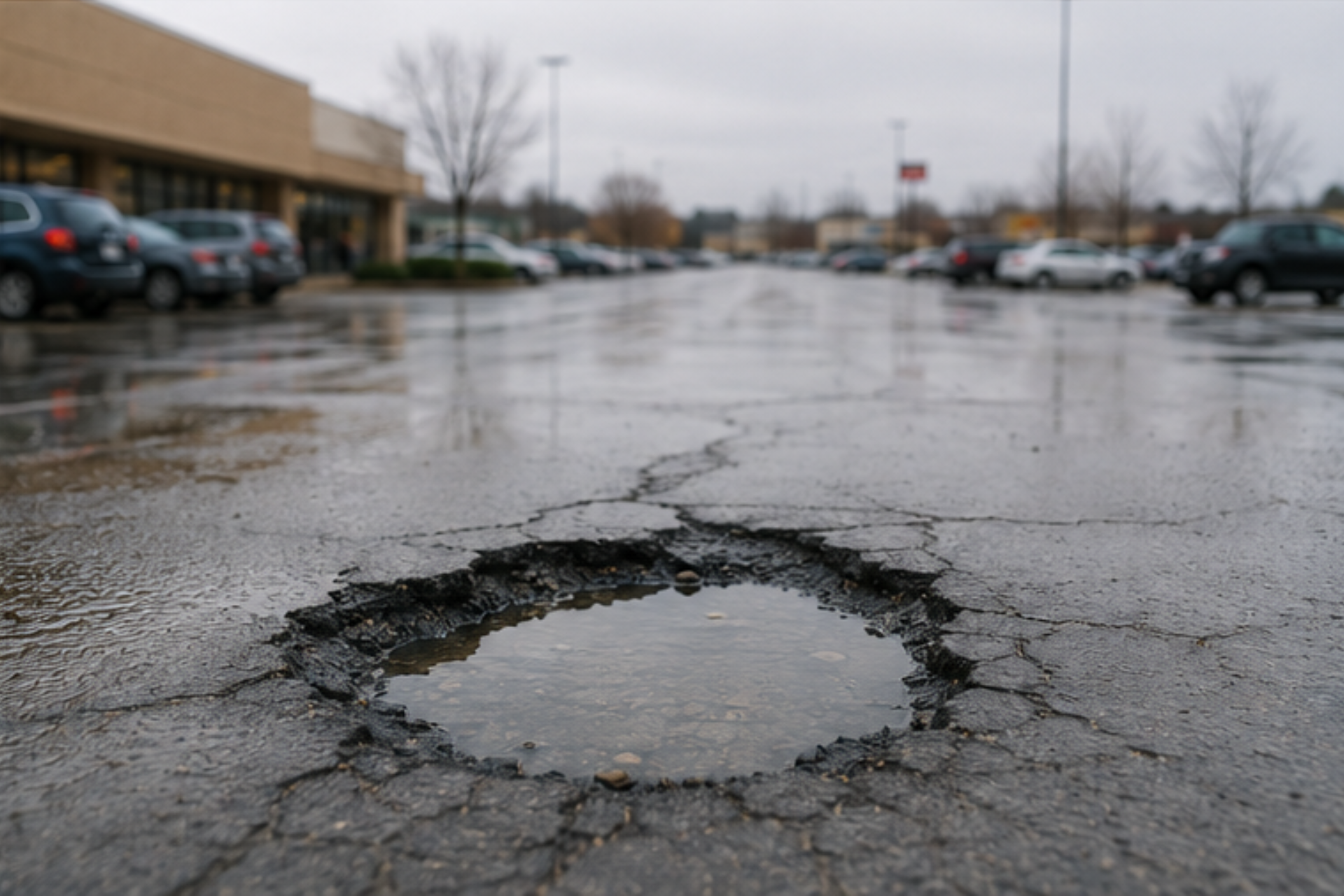
For example, a customer who slips on a spilled drink raises very different legal issues than someone who falls because of a pothole in the parking lot. Likewise, a claim involving tracked-in rainwater is analyzed differently than one involving ice accumulation, falling merchandise, or an employee-created hazard. The facts determine the legal strategy. Consider just a few examples:
Spilled liquid: When did the spill occur? How long was it on the floor? When was the area last inspected?
Pothole or uneven pavement: How long had the condition existed? Were inspections performed? Had anyone previously reported the defect?
Snow or ice: Was the accumulation natural or unnatural? What were the weather conditions? What snow and ice removal efforts were undertaken?
Tracked-in rainwater: Was it actively raining? Were floor mats and warning signs in place? Was the condition open and obvious?
Falling merchandise: How was the merchandise displayed? Did an employee create the condition? Was the display properly maintained?
Employee-created hazard: Did an employee recently mop the floor, stock merchandise, or otherwise create the condition that allegedly caused the fall?
Each scenario requires different evidence, different witnesses, and often a different legal analysis. That's why retailers should avoid a "one-size-fits-all" approach to investigating accidents. The best practice is to preserve as much relevant evidence as possible immediately after the incident and then evaluate the specific facts before deciding how to respond.
Reasonable care, not perfection, is the legal standard. A thoughtful investigation tailored to the facts of each incident puts retailers in the best position to defend claims and make informed decisions about whether a case should be resolved, defended, or litigated.
The Bottom Line for Retailers
Most premises liability cases are won or lost long before anyone steps into a courtroom. While retailers can't prevent every accident, they can control how they respond after one occurs.
In my experience, the biggest mistakes rarely involve the accident itself. Instead, they happen in the minutes, hours, and days that follow—when evidence isn't preserved, documentation is incomplete, witnesses disappear, or important decisions are delayed. A consistent post-incident response can make all the difference.
That means documenting the scene, preserving surveillance footage and inspection records, identifying witnesses, gathering employee statements, and maintaining an accurate incident report. Those simple steps often provide the evidence needed to evaluate liability and defend a claim effectively.
Just as importantly, don't wait until a lawsuit is filed to seek legal guidance. Early involvement allows counsel to preserve critical evidence, assess potential exposure, and develop a strategy before important opportunities are lost.
The legal standard is reasonable care—not perfection. By implementing clear procedures and responding thoughtfully after a customer slips and falls, retailers can reduce risk, strengthen their defenses, and place themselves in the best possible position if litigation arises.
A customer's fall doesn't automatically create liability, but how your business responds afterward can have a significant impact on the outcome of a claim. Preserving evidence, documenting the incident, and acting quickly can strengthen your defense and reduce unnecessary exposure. Working with experienced litigation and risk management counsel helps retailers prepare for claims before they become costly lawsuits.